The label is not the company.
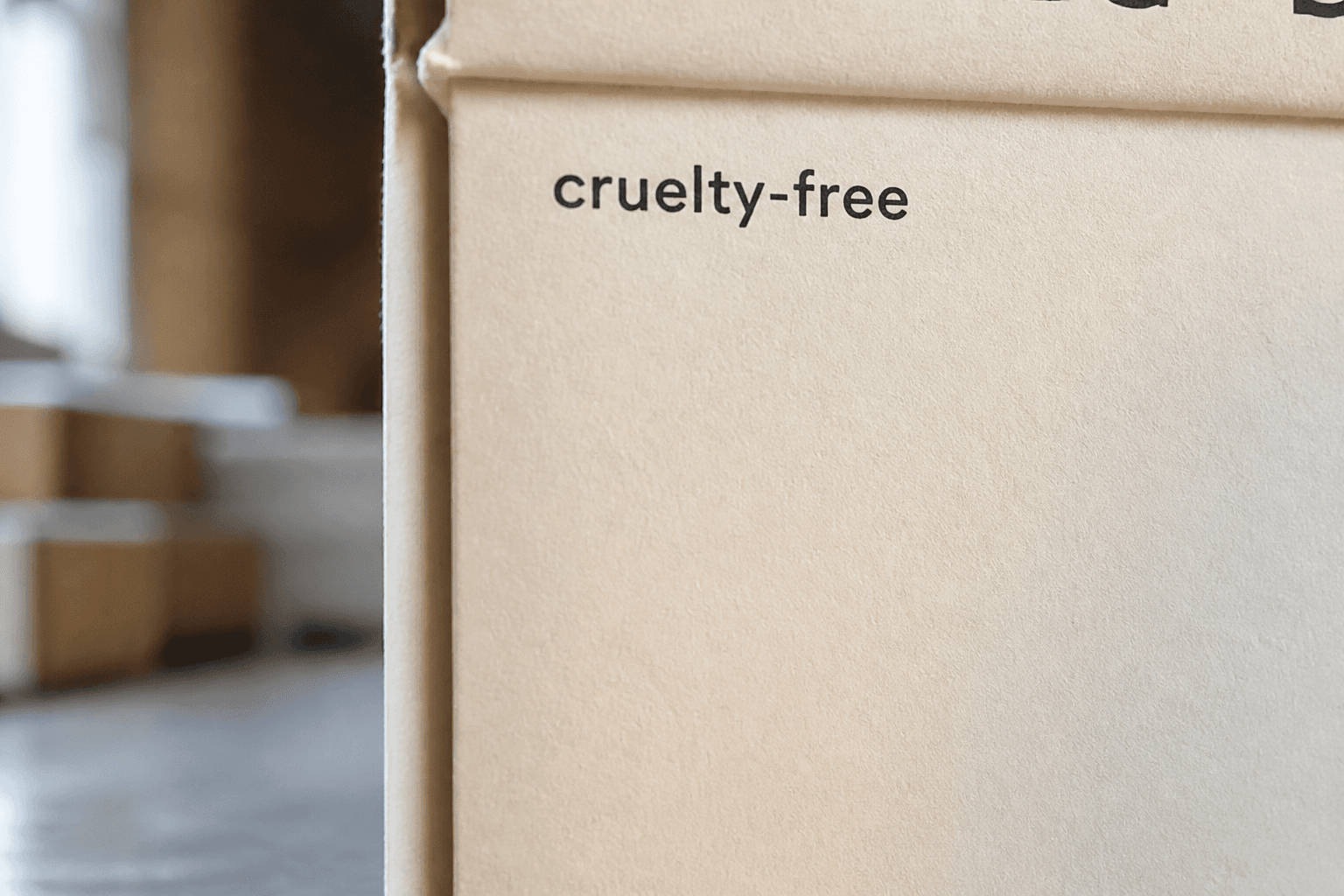
The carton can be telling the truth about the bottle and still be silent about the company. “Cruelty-free” is a line of type. It is not an org chart, a supplier list, or a map of where the brand is sold.
This page is how that line usually works — and where it stops.
The finished product
This is the easiest claim, and the one you can read without turning the box over.
“We don’t test this product on animals.” Maybe they don’t. The finished formula is the last step. It is also the smallest part of the chain. A claim that ends here has not said anything about the ingredients, the suppliers, or the parent.
Most labels stop here.
The ingredients
A product is a mixture. The active, the preservative, the solvent, the fragrance — each one arrived from somewhere.
If an ingredient is tested for this brand, or accepted because a test was required, the finished-product sentence can still print. Rule 1 does not stop at the tank. It includes the ingredients in the tank.
Some claims never mention this layer. BunnyIndex does.
The suppliers — and anyone asked to test
Someone else made the raw materials. A brand that “doesn’t test” can still buy from a supplier that does, or that will, when asked.
Third parties count. If the brand commissions a test, that is the brand’s test. If a supplier tests on the brand’s behalf, that is still in the chain. “Not in our building” is not a standard.
Some claims stop at the factory. The factory is not the supply chain.
Where it is sold
If a market requires animal tests for cosmetics, selling there is not a paperwork problem. It is a test.
A brand can keep a cruelty-free policy in one place and still put the product into a market where tests are required. The label in your hand will not mention that.
We do not name those markets on this page. The rule is simple: not sold where testing is required. If the brand takes that trade, it is not in the directory.
The parent
This is the layer the carton almost never mentions.
A subsidiary can have a cruelty-free policy, a dedicated lab, a nice about page. A controlling parent can still test — when legally required, or as policy. Research, registration, and revenue still belong to the group.
Most claims never include the parent. Almost no badge is a substitute for reading who owns the brand. That is rule 3.
A minority investor is not the same thing as a controlling parent. We do not treat every stake as a fail. We do treat a testing parent as one. The line is control, not a vibe about “selling out.”
What BunnyIndex actually does
We are not a certifier. We do not sell a bunny you can print.
To be listed, a brand has to pass all three:
- No animal testing at any stage — finished product, ingredients, suppliers, third parties.
- Not sold where testing is required.
- Not owned by a parent that tests.
The sentence on the box can be true as far as it goes. We care how far it goes.